
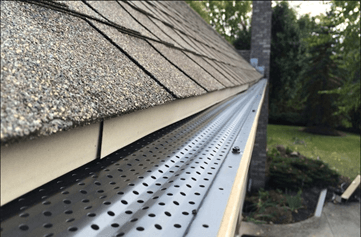
Gutter guards are one of the most misunderstood products in the home improvement market. Cheap foam inserts from big-box stores perform nothing like professionally installed micro-mesh systems — and in Florida's specific climate, the difference matters more than most homeowners realize.
Because tree cover and roof shape vary by neighborhood, homeowners comparing gutter guards sarasota fl services should start with an inspection of the existing drainage system.
Why Florida Creates Unique Gutter Guard Challenges
Most gutter guard marketing is written for the Mid-Atlantic and Southeast — areas dealing primarily with deciduous leaf drop in fall. Florida's debris profile is different:
- Live oak leaves — Small, waxy, and year-round. Drop continuously, not seasonally.
- Pine needles — Thin enough to slide through wide-opening guards, but they accumulate fast.
- Seed pods and samaras — From oaks, sweetgums, and maples — these are small enough to enter many guard openings.
- Spanish moss — Found throughout Sarasota County, moss can mat against guard surfaces and block water flow.
- Florida rain intensity — A guard that handles light rain may shed water over the edge during the 2–4 inch/hour rainfall rates we see in summer storms.
Types of Gutter Guards and How They Perform in Florida
Micro-Mesh Guards — Best for Florida
Micro-mesh guards use a fine stainless steel mesh (typically 50 microns) over an aluminum frame. Water flows through the mesh while debris stays on top and blows or washes off. Key advantages:
- Keeps pine needles and small debris out of the gutter channel
- Handles high-volume Florida rainfall without shedding water over the edge
- Durable in UV-intense environments — stainless mesh doesn't degrade like plastic
- Requires minimal maintenance — occasional brushing to clear surface debris after heavy oak drops
Reverse Curve / Surface Tension Guards — Moderate Performance
These guides rely on water clinging to a curved surface and flowing into the gutter while debris falls off. They work reasonably well with large leaves but struggle with:
- Pine needles — needles follow the water curve into the gutter
- Small seed pods — same problem
- High-intensity rain — water flow exceeds the clinging rate and overshoots the gutter
Foam and Brush Inserts — Not Recommended for Florida
Foam inserts that sit inside the gutter channel absorb water and create the perfect environment for mold, algae, and root growth. Brush inserts trap debris in their bristles, making cleaning harder than it would be without any guard. We don't install either type.
Screen Guards — Entry-Level Option
Basic aluminum or plastic screen guards are an improvement over no protection but allow pine needles to pass through most openings. In North Port and Sarasota County where pine coverage is heavy, screens require cleaning nearly as often as unprotected gutters.
What Gutter Guards Won't Do
Setting realistic expectations matters:
They won't eliminate all maintenance. Micro-mesh guards dramatically reduce cleaning frequency but don't eliminate it entirely. Plan for an annual inspection and occasional brushing of the guard surface.
They won't fix a failing gutter system. Guards installed over sagging, improperly pitched, or corroded gutters won't address the underlying problems. Evaluate gutter condition before adding guards.
Cheap guards won't perform like quality systems. A $3/foot foam insert won't perform like an $18/foot micro-mesh system. The price difference reflects real performance differences.
How Much Do Gutter Guards Cost in Sarasota?
Professional gutter guard installation sarasota fl typically runs $15–$30 per linear foot installed, depending on the system and complexity. For a 150-linear-foot home, that's $2,250–$4,500.
Compare that to the cost of two professional gutter cleanings per year at $200–$350 each — $400–$700/year over the 20+ year lifespan of a quality seamless gutter system works out to $8,000–$14,000 in cleaning costs alone, before factoring in any repair costs from debris-caused clogs.
Is a Gutter Guard Worth It for Your Home?
Strong case for leaf guards:
- Heavy tree coverage — oaks, pines, palms within 20 feet of roofline
- Two-story home where cleaning requires significant ladder work
- Rental property where maintenance visits are an ongoing expense
- You've had gutter overflow issues despite regular cleaning
- Your home has minimal tree coverage
- You already have open, fast-draining seamless gutters
- You're comfortable with twice-yearly DIY cleaning
Frequently Asked Questions
Do gutter guards cause ice dams? Not relevant in Southwest Florida — we don't get ice dam conditions.
Can I install gutter guards myself? Some screen-type guards are sold for DIY installation, but quality micro-mesh systems require professional installation for proper fit and warranty coverage. Improper installation can void roof warranty on some products.
What's the best gutter guard brand in Florida? We evaluate brands based on real-world performance in Florida conditions — micro-mesh construction, UV-resistant materials, and the ability to handle high-intensity rainfall without shedding. We'll recommend what we've seen perform best in your specific tree canopy and roof configuration.
Will gutter guards damage my roof or void my warranty? Properly installed guards that clip to the gutter rather than under shingles don't affect roof warranty. Guards that slide under the first shingle course can create problems and may void manufacturer warranties — we don't install those types.
How do I clean gutters with gutter guards on them? With micro-mesh guards, debris stays on the surface. Occasional brushing or rinsing with a hose handles most situations. A full removal-and-clean is rarely needed more than once every 3–5 years even in high-tree-coverage situations.
Read next
Need Help With Your Gutters?
No Leak Gutters handles all gutter installation, repair, and maintenance across Sarasota & Charlotte Counties. Get a free estimate today.
Related Gutter Services
Learn more about the services mentioned in this article.
Keep debris out and water flowing with professional gutter guard installation. Reduce maintenance and extend the life of your gutter system.
Fast, reliable gutter repair for leaks, sagging, detachment, and storm damage. We diagnose the issue and fix it right the first time.
Custom seamless aluminum gutters professionally measured and installed to protect your home from water damage. Built to last with premium materials.