
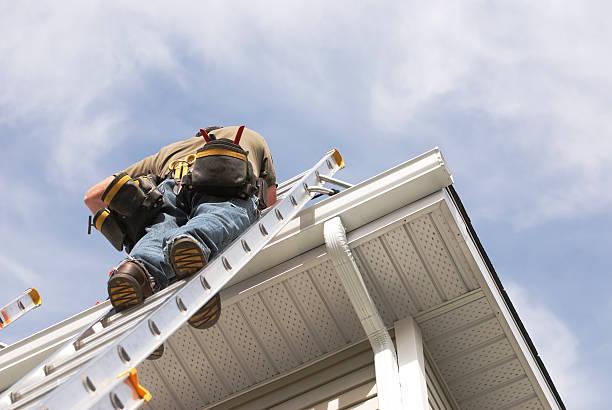
Coordinate gutter and soffit repairs by inspecting the roof edge, fascia, and soffit together first, then repairing any damaged support wood before installing or rehanging gutters.
If you are planning why gutters matter, the safest way to handle gutter and soffit work is to treat them as one roofline system, not two separate tasks. That approach is especially important in Southwest Florida, where heavy rain, wind-driven moisture, and salty air can expose hidden damage fast. The goal is to protect the roof edge, keep water moving away from the house, and make sure new gutters are fastened to sound material instead of rotted fascia or weakened trim.
In practice, that means the title How To Coordinate Gutter and Soffit Repairs is really about sequence. You do not want to install new gutters over bad fascia, and you do not want to close up soffit problems before checking whether the roof edge has been leaking into the eave. The right order keeps a simple repair from turning into repeated callbacks, damaged paint, loose panels, or moisture trapped behind the exterior finish.
What to inspect before starting
Check the fascia first
The fascia is the board that gutters are commonly attached to, so its condition matters before any rehang or replacement. If fascia is soft, cracked, swollen, or separating from the roof edge, gutters may not hold securely. In many homes, damaged fascia is the first sign that water has been getting behind the gutter or drip edge.Look for:
- Soft spots when pressed gently
- Peeling paint or dark staining
- Fasteners that no longer bite firmly
- Visible rot at corners and seams
- Sagging gutter sections that may have pulled away from the board
Inspect the soffit next
Soffit panels help close in the underside of the eave and often support attic ventilation. If panels are loose, warped, missing, or stained, there may be a roof edge moisture issue or a fastening problem. It is important to check whether the soffit is simply cosmetic damage or a sign of a larger issue around the eave.Look for:
- Loose or rattling panels
- Gaps where insects or water can enter
- Water staining near the wall line
- Signs that panels were forced out of alignment
- Vent openings blocked by debris or paint
Confirm the roof edge is not leaking
Before any final gutter installation, inspect for signs of water intrusion along the roof edge. Staining on the fascia, damp insulation, or rusted fasteners can point to a leak path that should be handled before new gutter work is completed. If the roof edge is wet, the soffit repair should not be treated as a cosmetic fix.Decide whether the job is minor or broader
Some gutter repairs stay small. Others uncover concealed damage that changes the scope. If the work involves hidden wood rot, structural repair, or wide soffit replacement, the project may no longer be a simple exterior maintenance task. That is why the scope should be reviewed carefully before work starts.How to sequence the repairs
1. Remove or loosen the affected gutter section
Start by taking down the damaged section or loosening it enough to inspect the support behind it. This lets the contractor see whether water has damaged the fascia or subfascia. If the gutter was hiding the problem, that issue needs to be addressed before the gutter goes back up.2. Repair rotten fascia or subfascia first
If the fascia is compromised, replace or reinforce it before reinstalling gutters. Gutters should not be fastened to weakened material, because the weight of the gutter and the force of rainwater can pull loose again. In Florida, soffit and fascia details are meant to work together, so support repairs should happen before final trim is reassembled.3. Check soffit attachment and ventilation
Once the support wood is sound, verify that soffit panels are properly attached and that venting is still functioning. If panels are damaged or the edges are not secured, they can flutter in wind or let moisture in at the roof perimeter. Use corrosion-resistant fasteners and make sure the panel ends are supported as intended.4. Reinstall the gutter with the right slope and attachment points
After the support structure is repaired, reinstall the gutter so hangers penetrate sound framing or fascia material. The gutter should not block the drip edge or create a water path that sends runoff behind the gutter. A proper slope helps move water toward downspouts without creating standing water in the trough.5. Test drainage and watch the roof edge during runoff
After the work is done, run water through the gutter system and watch how it behaves at the roof edge. Water should stay in the gutter, move freely to the downspouts, and not back up behind the fascia. This final check helps catch small problems before they turn into another repair.
| Repair Question | Gutter-Only Work | Gutter and Soffit Work |
|---|---|---|
| What is being fixed? | Water collection and drainage | Drainage plus roof-edge trim and ventilation |
| What should be inspected? | Gutter, downspouts, hangers | Gutter, fascia, soffit, roof edge, fasteners |
| What can change the scope? | Sagging or leaking gutter sections | Rot, loose soffit panels, hidden wood damage |
| What gets repaired first? | Usually the gutter itself | Support wood and trim before gutter reinstallation |
| What is the risk of skipping inspection? | Poor drainage or overflow | Repeat damage, loose trim, moisture entry, missed rot |
When permits may matter
Not every gutter repair needs a permit, but that does not mean every related repair is automatically exempt. If the job extends into soffit, fascia, concealed structural members, or other building-envelope work, the scope may change. That is why homeowners should not assume a gutter replacement remains a minor repair once hidden damage is found.In Florida, it is smart to confirm with the local building department when the project expands beyond a straightforward gutter repair. This is especially true if the repair touches roof-edge components or involves replacing enough soffit or fascia that the work becomes more than routine maintenance. The safest plan is to clarify the scope before demolition starts, not after the old materials are already off the house.
Why sequence matters in Southwest Florida
Homes in this region face heavy rainfall, strong afternoon storms, and wind-driven moisture that can push water into small gaps at the eave. If gutters are installed before the fascia is repaired, the new system may fail early. If soffit panels are installed without checking the roof edge, hidden moisture may keep spreading.That is why a careful sequence is so important: 1. Inspect the roof edge and fascia 2. Repair any rotten support wood 3. Confirm soffit attachment and ventilation 4. Install or rehang gutters last
That order gives the gutter system a stable base and helps the soffit perform as intended.
Signs the job may need more than a gutter crew
A simple repair may become more involved if you notice:- Fascia crumbling when touched
- Mold or mildew near the eave
- Water staining extending into the attic side
- Multiple loose soffit panels along one run
- Gutters separating from the house in several places
- Evidence that the drip edge or roof edge materials are damaged
For matching local service options, see gutter repair port charlotte fl.
Frequently Asked Questions
How do I know if I need gutter repair, soffit repair, or both? Look at where the damage starts. If water is overflowing or gutters are sagging, the gutter system may be the main issue. If the underside of the eave is loose, stained, or open, the soffit may need repair too. If the fascia is soft or rotten, both systems may be affected because the gutter and soffit depend on that support area.
Should fascia always be replaced before new gutters go up? If the fascia is damaged, yes, it should be repaired before reattaching gutters. Gutters need a solid fastening surface. Putting them on weak or rotten wood can lead to fastener pullout, sagging, and repeated leaks.
Can soffit repairs be done after the gutters are installed? Sometimes, but only if the soffit work does not require disturbing the gutter line. In many cases, it is better to repair the support wood and soffit first, then install the gutter last so the drainage path and fastening points are correct.
Do gutter and soffit repairs usually need a permit? It depends on the scope. A minor gutter repair may be exempt, but soffit, fascia, or structural work can change the permit question. If the project extends beyond basic gutter replacement, check with the local building department before starting.
What is the biggest mistake homeowners make with these repairs? The most common mistake is treating gutter replacement as the whole job when the fascia or soffit is already damaged. That can hide rot, trap moisture, and cause the new gutter to fail early. The better approach is to inspect the entire roof edge first and repair the support structure before reinstalling anything.
Need Help With Your Gutters?
No Leak Gutters handles all gutter installation, repair, and maintenance across Sarasota & Charlotte Counties. Get a free estimate today.
Related Gutter Services
Learn more about the services mentioned in this article.