
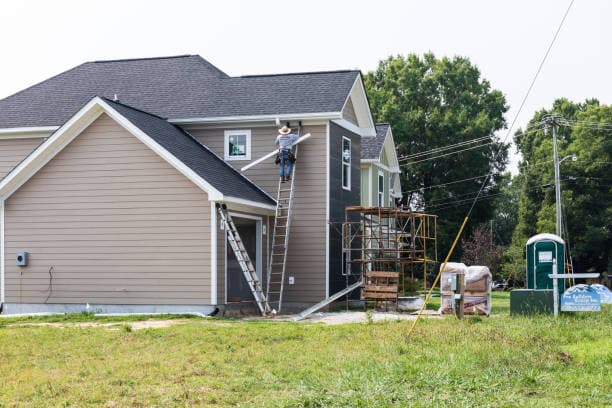
What Are Seamless Gutters? Seamless gutters are continuous gutter runs that are custom formed to match the length of each roof edge, which means fewer joints and fewer places where leaks can start. For many homeowners in Southwest Florida, that simple difference is the main reason to consider them when planning a roof drainage system.
How Seamless Gutters Work
Seamless gutters are made on site from a coil of material that is fed through a roll-forming machine. The machine shapes the metal into a long gutter section that is cut to the exact measurement of each straight roof line. Corners, end caps, and downspout openings are added where needed.
That process creates a gutter system that is not truly one single piece from every angle, but it is seamless along the long straight runs. The fewer joints a gutter has, the fewer weak spots there are for water to escape.
Why the word seamless matters
In a sectional system, shorter pieces are connected together along the roofline. Each connection needs to stay tight over time. Temperature changes, wind, heavy rain, and normal movement can all affect those joints.
With seamless gutters:
1. There are fewer connection points along the straight sections. 2. There are fewer spots that can separate, sag, or trap debris. 3. The finished look is usually cleaner and more uniform. 4. Maintenance can be easier because there are fewer seams to inspect.
How they fit Florida homes
Florida homes need roof drainage that can handle intense rainfall and strong runoff from large roof surfaces. That is especially important in coastal and inland communities where storms can move quickly and drop a lot of water in a short time.
A properly sized gutter system is not about using the same product on every house. It is about matching the drainage plan to the roof shape, pitch, and water flow. In that sense, seamless gutters are often a practical choice because they can be made to fit the home rather than forcing the home to fit a standard length.
A simple homeowner example
Imagine a back roof edge that measures 42 feet. With seamless gutters, that straight run can often be formed as one continuous section instead of being pieced together from several short lengths. The corners still need connections, but the long middle section has fewer opportunities to leak.
That does not make seamless gutters perfect, and it does not remove the need for proper installation. It simply reduces one common source of trouble.
Common materials
Seamless gutters are often formed from aluminum, which is lightweight and widely used for residential drainage. Other materials may exist in some markets, but the key feature is not the metal itself. The key feature is how the gutter is fabricated and installed.
For homeowners, material choice often comes down to a balance of appearance, durability, and local conditions. In Southwest Florida, resistance to heavy rain and corrosion concerns can matter as much as style.
What seamless gutters are not
Seamless gutters do not mean there are no joints anywhere on the system. There still must be joints at corners, outlets, and certain transitions. They also do not eliminate the need for regular maintenance. Leaves, roof grit, seed pods, and debris can still collect in any gutter system.
The benefit is simpler: fewer seams along the long straight sections of the gutter means fewer places where water can leak under normal conditions.
Seamless Gutters vs Sectional Gutters
Many homeowners first hear about seamless gutters when they are comparing them to sectional gutters. Both styles move water away from the roof, but they are built differently and that changes how they perform over time.
Key differences
| Feature | Seamless Gutters | Sectional Gutters |
|---|---|---|
| Construction | Formed on site to the roof measurement | Built from shorter connected sections |
| Joints along straight runs | Fewer | More |
| Leak risk at seams | Generally lower along long runs | Generally higher because there are more seams |
| Appearance | Usually smoother and more uniform | More visible connection points |
| Repairs | Damage may affect a longer custom section | Individual sections can sometimes be replaced more easily |
| Best fit | Homeowners who want fewer seams and a custom fit | Projects where short pieces or simple replacement are preferred |
Why fewer seams can matter
Every seam is a potential maintenance point. Sealant can age. Fasteners can loosen. Debris can build up near an overlap. When water is flowing quickly during a storm, even a small opening can become noticeable.
That is why many homeowners prefer seamless gutters for primary roof edges. The main selling point is not that they never leak. It is that there are fewer places for leaks to begin.
When sectional gutters can still make sense
Sectional gutters may still work for some homes or repair projects. They can be a reasonable option when:
- Only a short run needs replacement.
- A homeowner wants a simpler material handling process.
- A project is temporary or very limited in scope.
- The roof design does not justify a full custom installation.
What to consider before choosing
A homeowner should think about more than just the gutter itself. It is also important to consider:
- Roof size and slope
- Number of corners and downspout locations
- Nearby trees and debris load
- How much rain the property tends to receive
- Whether the home has drainage areas that already collect water
The practical tradeoff
Seamless gutters often cost more than sectional gutters because they are custom formed during installation. That difference can be worth it for homeowners who want fewer seams and a cleaner finished look. But cost, home layout, and drainage needs all matter.
If you want a deeper look at value, it may also help to read our related guide on are seamless gutters worth it.
Installation factors that affect performance
Even a seamless system can fail if it is not planned well. Good performance depends on:
1. Correct gutter pitch so water moves toward the downspouts. 2. Enough downspouts for the roof size and water load. 3. Secure fasteners that support the gutter under heavy rain. 4. Proper outlet placement so water does not pool. 5. A drainage path that sends water away from the foundation.
When homeowners notice the difference
The benefits of seamless gutters are often easiest to notice during a heavy rain. Homeowners may see less dripping at the seams, a smoother water flow, and a cleaner exterior appearance. Over time, reduced seam maintenance can become just as important as the initial look.
Frequently Asked Questions
What are seamless gutters made of?
Most residential seamless gutters are formed from a coil of material, often aluminum, that is shaped on site to the exact length needed. The material itself is less important than the custom forming process, which reduces the number of seams along the roofline.
Are seamless gutters completely leak free?
No gutter system is automatically leak free. Seamless gutters simply reduce the number of seams along the straight runs, which lowers the number of places where leaks can start. Corners, outlets, and end points still need careful installation and maintenance.
Do seamless gutters help in heavy rain?
They can. In areas that receive intense rain, a custom fitted gutter system can help move water more efficiently when it is sized and installed correctly. The gutter size, slope, and number of downspouts are just as important as the seamless design.
How long do seamless gutters last?
Lifespan depends on the material, local weather, maintenance, and installation quality. Regular cleaning and timely repairs can help any gutter system last longer. In humid, storm prone climates, upkeep matters because debris and standing water can shorten service life.
Can seamless gutters be repaired?
Yes. Small issues such as loose fasteners, outlet problems, or minor seam concerns at corners can often be addressed without replacing the entire system. If a long section is damaged, repair options depend on the extent of the problem and the material used.
A few signs a home may need them
Homeowners often consider seamless gutters when they notice:
- Frequent leaks at gutter joints
- Staining on fascia boards
- Overflow during heavy rain
- Water collecting near the foundation
- Old sectional gutters with many patch repairs
What to ask before scheduling installation
A homeowner can save time by asking a few basic questions:
1. How will the gutter size be matched to the roof? 2. Where will downspouts be placed? 3. What material options are available? 4. How will runoff be directed away from the home? 5. What maintenance will be needed after installation?
Those questions help make sure the system is designed for the house, not just installed as a standard product.
Seamless gutters are best understood as a custom drainage solution for the roof edges of a home. They are not magic, and they are not automatically the right answer for every property, but they are a practical option for homeowners who want fewer seams, a cleaner look, and a system that is formed to fit the roofline.
For matching local service options, see north port gutters.
Need Help With Your Gutters?
No Leak Gutters handles all gutter installation, repair, and maintenance across Sarasota & Charlotte Counties. Get a free estimate today.
Related Gutter Services
Learn more about the services mentioned in this article.