
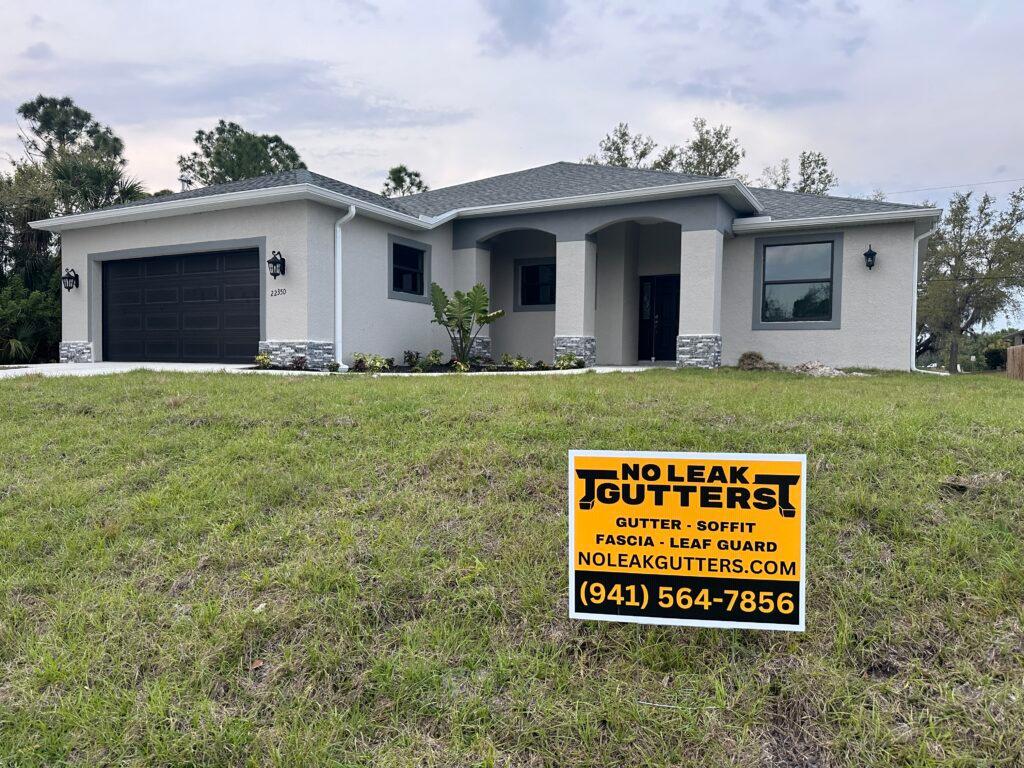
Most homes use 5-inch or 6-inch gutters, but larger and specialty sizes are available when a roof sheds more water or the home needs extra drainage capacity.
When homeowners ask What Size Gutters Are There? the most useful answer is that the common options are not just about width. The right gutter size depends on how much roof area drains into the gutter, how steep or complex the roof is, how many downspouts are installed, and how heavy the rain tends to be in your area. In Southwest Florida, that matters because short, intense storms can push a lot of water across the roof edge very quickly.
For that reason, gutter sizing should be treated as a drainage decision, not just a style choice. A smaller gutter may work on a compact roof section, while a larger gutter may be a better fit for broad roof faces, long valleys, or areas that collect water from multiple slopes.
Common Gutter Sizes Homeowners See
The main residential options
The most common gutter sizes you will see on houses are:
1. 5-inch K-style gutters 2. 6-inch K-style gutters 3. 7-inch gutters 4. 8-inch gutters 5. Half-round gutters in 4-inch, 5-inch, 6-inch, and 7-inch diameters
K-style gutters are the standard choice on many homes because they blend in well and handle typical roof drainage. Half-round gutters have a more rounded look and are often chosen for certain architectural styles or design preferences.
What the size number means
The size number usually refers to the width of the gutter opening or nominal gutter size. Bigger is not automatically better, but a larger gutter can hold and move more water before it overflows. That can be useful when:
- The roof is large
- The roof has several steep sections feeding one gutter line
- The home has limited downspout locations
- Rainfall intensity is high
- Leaves or debris are a concern and more capacity is helpful
Typical uses by size
| Gutter size | Common use | General note |
|---|---|---|
| 5-inch K-style | Smaller to medium roof sections | Often used on standard homes with moderate runoff |
| 6-inch K-style | Larger roof areas or heavier runoff | A common upgrade for better water handling |
| 7-inch gutters | Bigger roof lines or higher capacity needs | Less common, but useful in some drainage-heavy layouts |
| 8-inch gutters | Large or specialty drainage applications | Usually reserved for very demanding runoff conditions |
| 4-inch half-round | Small or decorative applications | More limited capacity |
| 5-inch half-round | Smaller residential roofs | Often chosen for appearance as much as function |
| 6-inch half-round | Moderate roof drainage | Balances style and capacity |
| 7-inch half-round | Larger or more demanding roof sections | Less common, but available |
Why 5-inch and 6-inch gutters are so common
For many homes, 5-inch gutters are sufficient because they are widely available, familiar, and suitable for many standard roof sections. A 6-inch gutter is often selected when homeowners want more reserve capacity or when the roof layout sends a larger volume of water to the gutter edge.
In Southwest Florida, a 6-inch gutter is often worth considering on bigger roof faces or where the drainage path is more demanding. That does not mean every home needs one. It means the roof should be looked at as a system, including the gutter profile, downspouts, and the way water moves off the roof.
If you are still sorting out whether gutters make sense for your home, this guide may help: why you need gutters.
How gutter size affects performance
A larger gutter can do more than simply hold extra water. It can also help reduce overflow during sudden downpours, especially when paired with appropriately sized downspouts. But if the downspouts are too small or too few, even a large gutter can still back up.
That is why gutter size and downspout size should be considered together. A wider gutter without enough outlets is not a complete solution.
What to consider before choosing a size
Before selecting a gutter size, it helps to look at:
1. Roof area draining to each gutter run 2. Roof pitch and how quickly water moves 3. Valleys and intersections that concentrate runoff 4. Number and placement of downspouts 5. Nearby trees and debris load 6. Local rainfall intensity 7. Fascia condition and mounting surface
A home with a simple roofline may not need the same gutter capacity as a home with multiple roof planes and long drainage runs. Even two houses of similar size can need different gutter sizes if one has more concentrated runoff.
Florida-specific considerations
Florida homes need drainage planning that accounts for heavy rain events. The Florida Building Code addresses storm drainage design, and horizontal gutter sizing is part of that drainage conversation. In practical terms, that means the right gutter size depends on how the roof and drainage system work together.
In Southwest Florida, homeowners in places like North Port, Sarasota County, and Charlotte County often find that 6-inch gutters are a sensible choice for larger roof sections or more intense runoff conditions. Smaller sections may still perform well with 5-inch gutters when the roof layout is simple and the downspout system is adequate.
That said, there is no one-size-fits-all answer. Local requirements and site conditions can affect the best setup, so it is smart to evaluate each home individually.
A simple way to think about sizing
If you want a practical rule of thumb, think of gutter sizing like this:
- 5-inch gutters fit many standard residential situations
- 6-inch gutters offer more capacity for heavier runoff
- 7-inch and 8-inch gutters are specialty choices for larger drainage demands
- Half-round gutters are available in several sizes and may be selected for appearance as well as function
For matching local service options, see soffit repair venice fl.
How to Choose the Right Gutter Size for Your Home
Start with the roof, not the gutter
The first step is to look at the roof area that drains into each gutter line. A long, steep roof section can send much more water to one spot than a small, low-slope section. The shape of the roof matters too, because valleys and transitions can channel water fast.
Match gutter size to downspout capacity
A larger gutter can only do its job if the downspouts can move the water away efficiently. If downspouts are undersized or too far apart, water can sit in the gutter or spill over during heavy rain.
Useful questions to ask include:
- How many downspouts are on this run?
- Are the outlets large enough for the roof area?
- Does one section collect water from multiple slopes?
- Is overflow happening at corners or low points?
Look at the house as a whole system
A well-sized gutter system includes more than the trough itself. It also depends on:
- Hangers and fasteners that support the gutter
- Proper slope so water moves toward the outlet
- Downspout placement that prevents bottlenecks
- Splash control and drainage away from the foundation
When to think about an upgrade
You may want to consider a larger gutter size if:
1. Water spills over during normal storms 2. Roof valleys dump water into one section 3. You have frequent clogging and overflow at the same time 4. The current system was sized for a smaller roof area 5. You are replacing gutters on a more complex roof 6. You want more margin during intense Florida rain
What a homeowner should ask an installer
If you are comparing gutter options, ask these straightforward questions:
- What size is appropriate for each roof section?
- How many downspouts will be used?
- Are some parts of the roof better suited to 5-inch gutters and others to 6-inch gutters?
- Will the fascia and mounting surface support the system properly?
- Are there local drainage concerns that should influence the design?
Frequently Asked Questions
What is the most common gutter size for homes?
5-inch and 6-inch K-style gutters are the most common residential choices. Many homes use one of those two sizes because they fit standard roof drainage needs well.
Are 6-inch gutters better than 5-inch gutters?
Not always. A 6-inch gutter generally offers more capacity, but the better choice depends on roof size, roof shape, and downspout layout. A smaller roof section may work perfectly with 5-inch gutters.
Do larger gutters always prevent overflow?
No. Larger gutters help, but overflow can still happen if the roof collects too much water in one area, the downspouts are undersized, or the system is not sloped and placed correctly.
Can half-round gutters handle heavy rain?
Yes, if the size and drainage layout are appropriate. Half-round gutters are available in several diameters, but the exact performance depends on the roof area and downspout system just like any other gutter style.
Should I choose gutter size based on Florida rain?
Yes. In Florida, rainfall intensity is an important factor. Roof area, roof geometry, and drainage capacity should all be considered, not just the width printed on the gutter.
Final sizing takeaway
The answer to What Size Gutters Are There? is simple on the surface but project-specific in practice. Most homeowners will be choosing between 5-inch and 6-inch gutters, with larger and specialty sizes available when the roof demands more capacity. The right size is the one that fits your roof, your downspouts, and your local weather conditions.
Need Help With Your Gutters?
No Leak Gutters handles all gutter installation, repair, and maintenance across Sarasota & Charlotte Counties. Get a free estimate today.
Related Gutter Services
Learn more about the services mentioned in this article.