
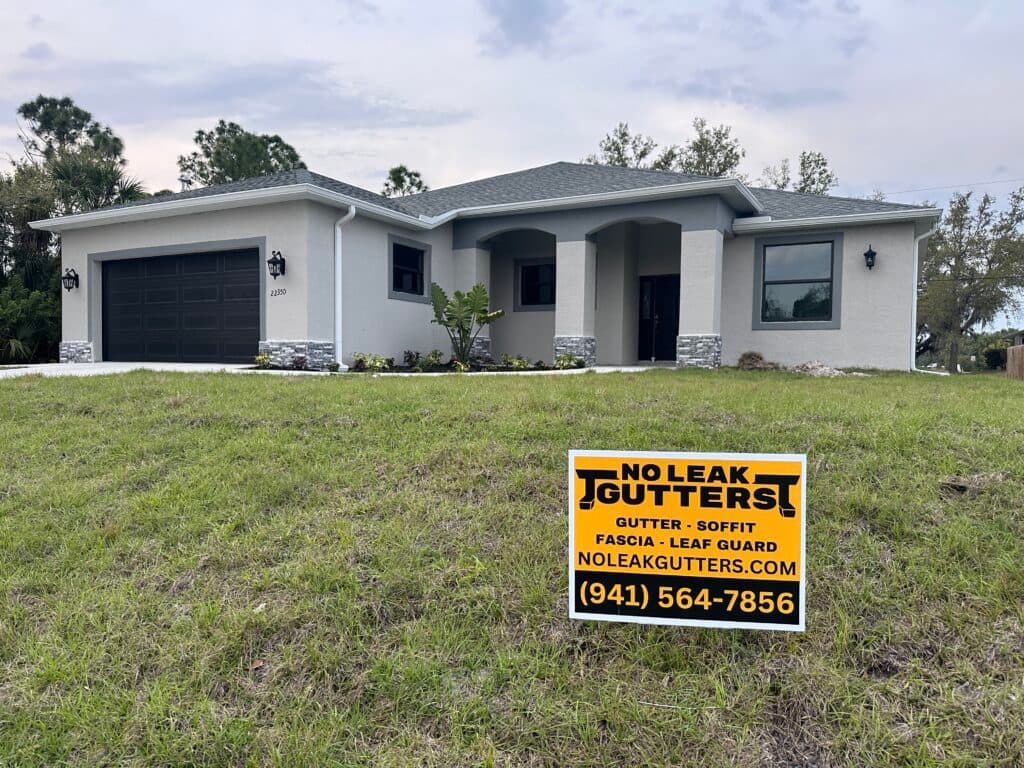
Yes, gutters can be installed on a metal roof, and in many homes they are an important part of keeping rainwater under control. If you are asking, "Can Gutters Be Installed on a Metal Roof?" the practical answer is yes, but the gutter should be planned as part of the roof edge details, not treated as an afterthought.
Metal roofs shed water differently from shingle roofs, so the edge detail matters. The gutter has to collect runoff without blocking the roof's natural drainage path, and the eave needs to be detailed so water stays outside the structure. That is why the roof profile, edge trim, flashing, and gutter placement all need to work together.
For matching local service options, see seamless gutters north port fl.
How gutters work with a metal roof
A metal roof moves water quickly. On many panel systems, water travels down the panels and exits at the eave, where edge metal and flashing guide it into the gutter. If that transition is not handled correctly, water can overshoot the gutter, run behind it, or splash back onto fascia and soffit.
The roof edge has to stay watertight
At the eave, the roof assembly usually depends on one or more of these details:
1. Drip edge or edge flashing to guide water outward. 2. Closure strips or sealing components to reduce gaps at panel ends. 3. Proper gutter position so runoff drops into the trough instead of behind it. 4. Secure attachment that does not damage the metal roofing panels.
That means the question is not simply whether gutters can go on a metal roof. The real question is how the edge is built. A good installation keeps the roof watertight, supports drainage, and avoids trapping water where corrosion or leaks can begin.
Why the gutter style matters
Not every gutter profile is equally forgiving. The shape, size, and hanging method should match the amount of runoff the roof can deliver. In Southwest Florida, that is especially important because heavy rain can overwhelm undersized gutters and downspouts.
A homeowner should expect the installer to consider:
- Roof pitch and panel profile
- Eave overhang
- Fascia condition
- Downspout locations
- Rainfall volume during storm events
- Exposure to salt air and wind
Common concerns homeowners have
Here are the issues that come up most often when gutters are added to a metal roof:
- Will the gutter damage the roof? Not if it is installed without interfering with the panels or seams.
- Will water still run into the gutter? Yes, if the eave detail is set up to direct runoff correctly.
- Do metal roofs need different gutters? Sometimes the gutter size or attachment approach changes, but the goal is still simple water collection.
- Can gutters be added later? Often yes, but the existing fascia, edge trim, and roof condition need to be evaluated first.
What a good installation usually includes
A sound installation is usually built around the following checklist:
| Item | What it should do | Why it matters |
|---|---|---|
| Eave flashing or drip edge | Carry water outward | Helps keep runoff out of the fascia area |
| Roof closure or sealed edge detail | Close gaps at the panel end | Reduces water intrusion and wind-driven rain entry |
| Gutter placement | Catch runoff cleanly | Prevents overshoot and backflow |
| Hangers or brackets | Support the gutter securely | Important in wind and heavy rain |
| Downspouts | Move water away from the home | Prevents pooling around the foundation |
A note for Southwest Florida homes
In coastal and hurricane-prone areas, the gutter system has to handle more than everyday rain. It should be able to stand up to wind, sudden downpours, and corrosion exposure. That is why local requirements, roof approvals, and manufacturer instructions matter so much. A system that works in one region may need different fastening or sizing in another.
When you may need extra attention
A homeowner should ask for an inspection before adding gutters if any of these are present:
- Soft or damaged fascia
- Rust at the roof edge
- Missing or loose trim
- No clear drip line
- Evidence of water running behind the existing gutter
- A steep roof edge where runoff can overshoot easily
Why some metal roof systems need more planning than others
Metal roofing is a broad category. Standing seam systems, exposed fastener panels, and retrofit assemblies can each handle edge drainage a little differently. The profile of the roof, the type of underlayment, and the edge trim all affect how water leaves the roof.
In practical terms, that means the installer should verify:
1. How the roof manufacturer expects the eave to be finished. 2. Whether the gutter will sit under the drip line. 3. Whether panel closures or sealants are required at the eave. 4. Whether the gutter can be fastened without creating leaks or voiding the intended assembly detail.
For homeowners, the safest approach is simple: choose a gutter layout that matches the actual roof system, not a generic one-size-fits-all plan.
What to know before installing gutters on a metal roof
Before any gutter work begins, the existing roof edge should be evaluated. This is especially true if the roof is older, has had repairs, or is already showing signs of water staining. A careful look at the fascia, soffit, drip edge, and panel terminations can prevent repeat problems later.
Step-by-step planning guide
1. Inspect the fascia and roof edge for rot, rust, or movement. 2. Confirm how the metal panels terminate at the eave. 3. Identify where water naturally leaves the roof during rain. 4. Match the gutter size to the roof runoff and roof area. 5. Plan downspout locations so water moves away from the home. 6. Verify the fastening method is compatible with the roof and fascia. 7. Check that the gutter will not interrupt the roof's drainage path.
Signs the gutter design may be undersized
A gutter on a metal roof may need attention if you notice:
- Water pouring over the front during heavy rain
- Splash marks on siding or trim
- Water stains on fascia or soffit
- Soil erosion below roof edges
- Overflow near corners or inside turns
Why gutters are often worth it on metal roofs
Many homeowners choose metal roofing because it is durable and sheds water efficiently. Gutters complement that by moving runoff away from the house in a controlled way. Without gutters, water can drop directly around the perimeter, which may increase splashback, staining, and erosion.
If you are deciding whether a gutter system is worth adding, it helps to think about the whole drainage path. Roof water should move from the panels to the edge, into the gutter, down the downspouts, and away from the foundation. That full path matters more than any single component.
You can also learn more about the broader purpose in why gutters matter for roof and foundation protection.
Final practical takeaway
Gutters can absolutely be installed on a metal roof, but the job should be designed around the roof edge, not forced onto it. The best results come from matching the gutter to the roof profile, allowing the roof to drain naturally, and making sure the edge detail stays watertight. In Southwest Florida, wind, rain intensity, and corrosion exposure make that planning even more important.
Frequently Asked Questions
Can gutters be installed on a metal roof without special parts?
Sometimes, but the edge details still matter. A metal roof usually needs proper flashing, closure, and gutter positioning so water drains cleanly into the gutter instead of behind it.
Will a gutter damage a metal roof?
Not when it is installed correctly. Problems usually happen when the gutter blocks runoff, is fastened poorly, or is attached in a way that interferes with the roof edge.
Do metal roofs need larger gutters?
Not always, but they sometimes benefit from larger gutters or additional downspouts because metal roofs can move a lot of water quickly during heavy rain.
Can a gutter be added to an existing metal roof?
Yes, in many cases. The fascia, roof edge, and panel termination need to be checked first so the new gutter works with the existing assembly.
What is the biggest mistake to avoid?
The biggest mistake is placing the gutter without checking how the roof sheds water. If the gutter is too high, too low, or too close to the panel edge, water can overshoot or back up behind the gutter.
Need Help With Your Gutters?
No Leak Gutters handles all gutter installation, repair, and maintenance across Sarasota & Charlotte Counties. Get a free estimate today.
Related Gutter Services
Learn more about the services mentioned in this article.