
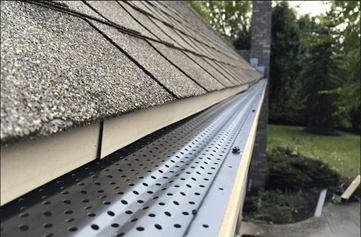
Choose a gutter guard that can handle Florida debris, move water fast in heavy rain, and stay easy to service without relying on marketing claims alone.
If you are comparing options for Southwest Florida, the best place to start is with the basics of roof drainage and the title How To Choose a Gutter Guard for Florida Homes. In this climate, the right guard is not the one with the boldest promise. It is the one that fits your roof, resists corrosion, sheds debris from live oak leaves to pine needles, and still lets gutters and downspouts do their job during intense rain.
For matching local service options, see gutter guard installation north port fl.
Florida homeowners should also think beyond curb appeal. Local maintenance rules and stormwater guidance make it clear that gutters and downspouts must stay free of obstructions, function without leaks, and move water without pooling. That means the real test of any guard is whether it improves drainage in the rain and reduces cleaning over time, not whether it sounds maintenance free in a brochure.
Start With Florida Conditions, Not Product Hype
A good gutter guard in Florida has to solve the problems your house actually faces. In Southwest Florida, that usually means a mix of heavy rain, windblown debris, roof grit, seed pods, and salty air. A guard that works well in a dry inland climate may underperform here if it clogs quickly or slows runoff during a downpour.
What your home is up against
Look at the trees, roof shape, and exposure around the house:
- Pine needles can slip through larger openings and build up under covers.
- Oak leaves and seed pods can mat on top of some styles and block water.
- Roof granules and fine grit can collect in channels and create sludge.
- Salt air can shorten the life of weak fasteners and low quality metals.
- Sudden heavy rain can overwhelm guards that look fine in a light shower.
Focus on drainage first
The main job of a gutter is to move water away from the roof and foundation. A guard should help that process, not create a choke point. When comparing products, ask whether the design:
1. Lets water enter quickly in a strong rain. 2. Keeps out common Florida debris. 3. Avoids standing water on top of the gutter line. 4. Does not force water over the front edge when the rain gets hard. 5. Can be cleaned or checked without removing the whole system.
If a guard slows the flow too much, traps leaves on top, or makes the gutter harder to inspect, it may create a new maintenance issue instead of solving one.
Materials matter in coastal and hurricane prone areas
For many Florida homes, noncombustible and corrosion resistant materials are a smart starting point. Aluminum and galvanized steel are common choices because they are built for outdoor exposure better than flimsy plastic alternatives. You should also pay attention to fasteners and attachment methods, since the weak point in some systems is not the screen itself but the way it is secured to the roof edge.
| Guard style | Best for | Possible drawback | Florida fit |
|---|---|---|---|
| Micro mesh | Fine debris like roof grit and small needles | Can collect surface debris and need rinsing | Often strong for mixed debris if installed correctly |
| Perforated screen | General leaf protection and simple maintenance | Smaller debris may pass through | Good for many homes with moderate tree cover |
| Reverse curve or hood | Shedding larger leaves | Can struggle in wind driven rain or heavy debris | Depends heavily on roof pitch and installation |
| Brush insert | Easy DIY placement | Can trap debris inside the gutter | Usually less ideal in high debris areas |
| Foam insert | Simple to fit | Can hold moisture and break down over time | Often a poor long term fit for humid, debris heavy conditions |
Check approval and compatibility before you buy
In Florida, product approval and installation details matter. A guard should be compatible with your existing roof system, gutter style, and local jurisdiction requirements. That includes the way it attaches, the materials used, and whether it is suitable for the wind exposure in your area.
Before you choose, confirm:
- The guard is approved for use in Florida where applicable.
- The attachment method matches your roof edge and gutter profile.
- The system will not interfere with shingles, underlayment, or roof drainage.
- The design is appropriate for your local weather and maintenance expectations.
Compare Guard Types Based on Real Maintenance
Many homeowners start with the idea that all gutter guards do the same thing. They do not. Some are better at keeping out large leaves, while others are better at stopping smaller debris. Some are easy to rinse from the ground. Others may require roof access or partial removal to service correctly.
Choose the type that fits your maintenance habits
If you want the least fuss, focus on serviceability, not just blockage resistance. A guard that rarely clogs but is difficult to inspect can still become a problem after a storm. In Florida, a practical choice is usually one that can be checked and cleaned without major disassembly.
Consider these questions:
- Can you tell from the ground whether water is flowing correctly?
- Will pine needles, seed pods, or roof grit sit on top of the guard?
- Can a technician clean it without damaging roofing materials?
- Does the design allow access to the gutter if a clog develops at the downspout?
- Will the guard still work after a season of wind, rain, and sun?
Match the guard to your roof and neighborhood
A home surrounded by mature oaks may need a different solution than a newer home with fewer trees. A steep roof sheds debris differently than a low slope roof. A long gutter run on a large home may need more attention to flow capacity than a smaller structure.
Use this simple decision guide:
1. Heavy tree cover and mixed debris: look for a durable metal system with fine debris control. 2. Moderate tree cover and easy access: a simpler screen may be enough if it can be maintained regularly. 3. High rain exposure and long gutter runs: prioritize high flow capacity and secure attachment. 4. Salt air exposure: choose corrosion resistant materials and quality fasteners. 5. Limited maintenance time: avoid systems that require frequent disassembly.
Signs a guard is probably not the right fit
Be cautious if a product:
- Claims to be completely maintenance free.
- Depends on a narrow water entry point that may overflow in heavy rain.
- Uses materials that look light or flimsy for a coastal climate.
- Is difficult to remove or inspect once installed.
- Lacks clear information about how it attaches to the roof edge.
How to weigh cost the smart way
Price matters, but a cheaper guard is not a bargain if it clogs, lifts, rusts, or blocks water during storms. Likewise, the most expensive option is not automatically the best. The real question is how well the system balances performance, durability, and upkeep for your home.
Think about total value in this order:
- Will it keep gutters clearer through the worst debris season?
- Will it still move water in a Florida downpour?
- Will it hold up in heat, humidity, and salt exposure?
- Will routine maintenance be simple enough to actually do?
- Does it fit the roof system without guesswork?
Frequently Asked Questions
What is the most important factor when choosing a gutter guard in Florida?
The most important factor is drainage performance in heavy rain. A guard has to keep debris out while still letting water move quickly through the gutter and downspouts without pooling or spilling over.
Are all gutter guards good for pine needles and small debris?
No. Pine needles, roof grit, and small seed pods can defeat some screen or hood styles. If your home has fine debris, choose a design that is specifically made to handle it and can still be serviced easily.
Do gutter guards mean I never have to clean my gutters again?
No. Florida homes still need routine inspection and occasional cleaning. A good guard reduces buildup, but it does not eliminate maintenance, especially after storms or during heavy pollen and leaf drop.
Should I choose aluminum or plastic gutter guards?
In many Florida settings, aluminum or galvanized steel is usually the safer long term choice because it is more durable and better suited to heat, humidity, and outdoor exposure. Plastic options may not hold up as well over time.
How do I know if a guard is approved for my home?
Check that the product and attachment method are appropriate for Florida and for your roof system. If you are unsure, ask for the product documentation and verify that the installation plan matches your local requirements.
Choosing a gutter guard for a Florida home comes down to one practical question: will it keep out the debris you actually get while still moving water fast enough for a heavy storm? If the answer is yes, and the system is built from corrosion resistant materials, approved for the roof it will be installed on, and easy to maintain, you are much more likely to end up with a guard that earns its keep.
Need Help With Your Gutters?
No Leak Gutters handles all gutter installation, repair, and maintenance across Sarasota & Charlotte Counties. Get a free estimate today.
Related Gutter Services
Learn more about the services mentioned in this article.