
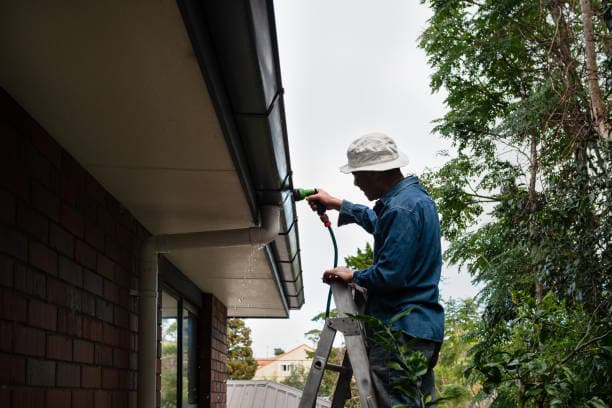
Can You Clean Gutters With a Leaf Blower? Yes, sometimes you can, but only for loose, dry debris and only when you can do the work safely. A leaf blower may help move light leaves, pine needles, and small bits of debris out of a gutter, but it is not a dependable solution for wet sludge, packed material, or gutters that have been sitting too long without cleaning. In Southwest Florida, where storms, humidity, and tree debris can turn gutter buildup into a heavy mess quickly, the method matters as much as the tool.
A leaf blower is best treated as one option in a broader maintenance routine, not a fix for every situation. If you are standing on a ladder, leaning over a roof edge, or trying to clear debris from an unstable position, the safety risk rises fast. For many homeowners, the smartest approach is to choose the method that matches the debris, the height, and the access conditions rather than forcing one tool to do everything.
When a leaf blower can work
Best conditions for blower cleaning
A leaf blower can be useful when:- Debris is dry and loose
- The gutter is only lightly filled
- Downspouts are not fully blocked
- You can work from a stable, safe position
- Weather is calm and surfaces are dry
When it usually falls short
A leaf blower is much less effective when gutters contain:- Wet leaves
- Decomposed organic sludge
- Roof grit mixed with dirt
- Small twigs and compacted debris
- Material packed tightly near elbows and downspouts
A simple comparison
Quick pros and cons
| Approach | Works best for | Main advantage | Main drawback |
|---|---|---|---|
| Leaf blower | Dry, loose debris | Fast and simple | Weak on packed buildup |
| Hand removal | Wet or heavy debris | More thorough | Slower and messier |
| Hose flushing | Light residue and checking flow | Helps confirm drainage | Can overflow clogged gutters |
| Professional service | Hard-to-reach or heavily blocked gutters | Safer access and complete cleaning | Not always needed for minor buildup |
Safety matters more than speed
The biggest risk is the fall hazard
The main concern with gutter cleaning is not the tool, it is the access. A leaf blower can tempt people to lean too far, climb onto a roof edge, or work from a ladder in an awkward position. That is where accidents happen. If your cleaning plan depends on balancing on a gutter, stepping onto a wet roof, or reaching too far from a ladder, the job has already become unsafe.Even a brief shift in footing can lead to a serious fall. Roof surfaces may be slippery, gutters may not support body weight, and wind can make blowing debris back toward you or into your eyes. For homeowners with north port gutters, that risk is not worth ignoring, especially during humid weather or after rain.
Safer ways to use a blower
If you use a leaf blower at all, keep these habits in mind:1. Work from the ground when possible. 2. Use extension attachments only if they keep you stable. 3. Keep both feet planted and avoid overreaching. 4. Never stand on a gutter. 5. Avoid wet roofs, slick ladders, and windy conditions. 6. Wear eye protection and gloves. 7. Keep people, pets, windows, and cars clear of the blast path.
What can go wrong
A blower can create new problems while trying to solve an old one:- Debris can spray into your eyes
- Dust and fine particles can blow back at you
- Wet material can splatter siding and windows
- Landscaping can get buried in gutter waste
- Long cords or hoses can become trip hazards
- A rushed stance can lead to a fall from a ladder or roof edge
When to stop and switch methods
If the gutter is still holding water, overflowing, or packed with sludge after a light pass, stop and use a different method. That may mean hand removal, flushing the downspout, or bringing in help. For many homes, especially older properties or roofs with harder access, a blower is only a first step.Frequently Asked Questions
Can I clean every gutter with a leaf blower?
No. A leaf blower can handle some loose, dry debris, but it is not reliable for wet or compacted buildup. Some gutters need manual cleaning or flushing to clear them properly.Is it safe to use a leaf blower from a ladder?
It can be risky. A blower can pull you off balance, and ladder work already carries fall hazards. If you cannot keep a stable stance, the safer choice is to avoid that setup.Will a leaf blower damage gutters?
Usually it will not damage sound gutters if used carefully, but aggressive use can scatter debris, stress weak attachments, or reveal existing problems like loose seams and clogged outlets. If gutters are fragile, take extra care.Should I use a leaf blower after every storm?
Not always. After small storms, a quick inspection may be enough. After heavy wind, leaf drops, or long wet periods, gutters may need a more thorough cleaning. Frequency depends on tree cover, roof pitch, and how quickly debris builds up.How do I know when it is time to clean my gutters?
A good rule is to clean them before debris blocks drainage, not after water starts spilling over the edge. If you are unsure about timing, this guide on how often to clean your gutters can help you plan a routine that fits your home: how often should you clean your gutters.A leaf blower can be a practical tool for gutter maintenance, but only when the debris is light and the working conditions are safe. In Southwest Florida, that often means using it for quick touchups rather than as a cure-all. If your gutters are heavy with wet debris, difficult to reach, or showing signs of overflow, it is better to switch methods than to push ahead with a risky setup.
For homeowners who want a safer, more consistent approach, the goal is not to use the fastest tool. It is to keep water moving away from the home without turning a routine chore into a fall hazard or a drainage problem.
For matching local service options, see gutter guard installation north port fl.
Need Help With Your Gutters?
No Leak Gutters handles all gutter installation, repair, and maintenance across Sarasota & Charlotte Counties. Get a free estimate today.
Related Gutter Services
Learn more about the services mentioned in this article.