
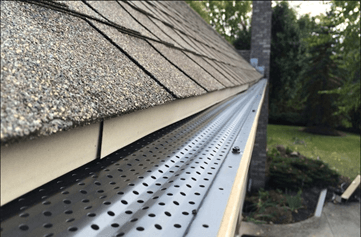
How To Measure Gutters for Gutter Guards starts with two things: the total length of each gutter run and the exact gutter profile or size. That is the safest way to order guards that fit your home, avoid unnecessary trimming, and reduce the chance of gaps, overflow, or improper drainage. If you live in Southwest Florida, it is also important to think beyond the gutter itself and account for roof area, slope, downspouts, and where water will discharge during heavy rain.
Before you begin, gather a tape measure, a notepad, a ladder with stable footing, and a helper if possible. If you are not comfortable on a ladder or your roofline is steep, it is better to measure from the ground where possible and let a professional confirm the details in person. For local homeowners comparing options, North Port gutters should always be planned with rain volume and roof drainage in mind, not just the visible gutter length.
Measure the Gutter Run First
The first step is to measure every gutter run separately. Do not measure one side of the house and assume the other side matches. Rooflines often change, and gutter guards need to fit each section as it is built.
Step by step measuring
1. Measure one straight gutter run from end to end. 2. Record the length in inches or feet and inches. 3. Repeat for each side, return, and porch section that will receive guards. 4. Add all the runs together for a total linear footage. 5. Mark each run on a simple sketch of the house.
What to include in your notes
Write down every detail that affects installation or trimming:
- Inside corners
- Outside corners
- End caps
- Miters
- Downspout locations
- Any roof-to-wall transitions
- Sections with unusually steep roof pitch
Why the roof area matters too
The gutter length alone does not tell the whole story. You also need to know how much roof drains into each run. A short gutter under a large roof slope can carry more water than a longer gutter under a smaller section of roof. That is why measuring the roof sections that feed each gutter run is useful when choosing guards or requesting a quote.
For homes with larger roof planes, heavy rainfall can overwhelm undersized drainage. In those cases, the total gutter footage should be reviewed alongside the gutter size and slope, especially when evaluating whether a 5-inch or 6-inch system is more appropriate for the home.
Confirm Gutter Size, Pitch, and Fit
Once you know the length of each run, verify the gutter profile and size. This is just as important as the measurement itself because gutter guards are not truly one-size-fits-all.
Check the gutter profile
Measure the width of the gutter opening and note the shape. Common residential gutters may look similar from the ground, but the actual dimensions can differ. A guard made for one profile may sit poorly on another.
Use this simple checklist:
- Measure the front-to-back width of the gutter opening
- Check whether the gutter is K-style, half-round, or another profile
- Note the lip or front rail shape
- Confirm the guard will sit on the existing gutter and fascia line
Measure slope or pitch carefully
Gutters need a slight slope so water moves toward the downspout. If the pitch is too flat, water can sit in the gutter. If it is too steep, water may race past the inlet and overflow at the wrong point.
When measuring for guards, pay attention to whether the gutter already follows the roofline correctly. A guard should match the installed system, not force the gutter into a shape it was not designed for.
How cut length is usually handled
Some guard systems are trimmed slightly short of the exact measured length so the section can fit cleanly without binding. This is one reason the installation instructions matter. Roof pitch can also affect the cut angle. If you are measuring at home, treat your numbers as a starting point and expect a small adjustment during installation.
Use this measurement table
| What to measure | Why it matters | How to record it |
|---|---|---|
| Each gutter run | Guards must fit section by section | Length in feet and inches |
| Corners and turns | Affects trimming and joins | Note inside or outside corner |
| Downspout locations | Determines water flow path | Mark exact position on sketch |
| Gutter width and profile | Confirms guard compatibility | Measure opening and shape |
| Roof area draining to each run | Helps estimate water load | Estimate roof section by side |
| Gutter slope | Supports proper drainage | Note whether run slopes to outlet |
Measure with local weather in mind
In Southwest Florida, rainfall can be intense enough to expose weak spots quickly. A guard that seems to fit in dry weather may still fail if the gutter is too small, the pitch is off, or the roof dumps a large amount of water into one area. That is why many homeowners also review whether the current system is already moving water the way it should before adding guards.
If you want a broader understanding of how guards affect maintenance and performance, see gutter guard benefits for Florida homes.
Frequently Asked Questions
How do I measure gutters for gutter guards if my house has multiple roof sections? Measure each gutter run separately and label them on a sketch. Then note which roof section drains into each run. This helps you avoid ordering too little material or choosing a guard that does not match the water load.
Do I need to measure the gutter width or just the length? You need both. Length tells you how much material to order, while width and profile tell you whether the guard will fit the gutter correctly.
Should I measure around corners and downspouts? Yes. Corners, end caps, and downspout locations affect how the guard is cut and installed. Leaving them out can lead to an inaccurate order or extra waste on site.
Can I use the same gutter guard on a 5-inch and 6-inch gutter? Not safely in every case. Some systems are designed for a specific gutter size or profile. Always confirm the actual dimensions before buying or cutting anything.
What if my gutter slopes unevenly? Uneven slope can create standing water or overflow. Measure the issue, note where the runoff is going, and have the gutter layout reviewed before installing guards, especially if water is already spilling onto walkways, driveways, or neighboring property.
When measuring for a Florida home, also think about where the water goes once it leaves the gutter. Local drainage conditions can vary by neighborhood, and you may need to make sure downspouts do not discharge in a way that creates nuisance runoff or puddling. In areas like Sarasota County, Charlotte County, and surrounding Southwest Florida communities, that extra check can save trouble later.
If you are comparing guard options, keep your notes simple and practical:
- Total linear footage for each run
- Gutter size and profile
- Number of corners and turns
- Downspout positions
- Roof sections feeding each run
- Any problem areas already showing overflow or staining
Need Help With Your Gutters?
No Leak Gutters handles all gutter installation, repair, and maintenance across Sarasota & Charlotte Counties. Get a free estimate today.
Related Gutter Services
Learn more about the services mentioned in this article.