
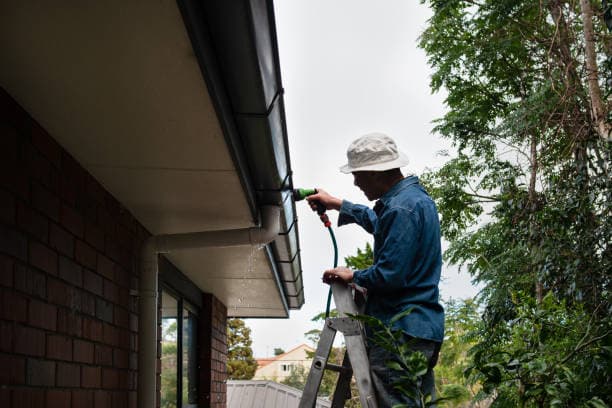
Gutters can overflow even when they look clean because the problem is often hidden in the downspout, outlet, pitch, roof valley, or gutter size. If water spills over the front during a Florida storm, the gutter system is either blocked somewhere, moving water too slowly, or receiving more roof runoff than it was built to handle.
When the cause is hidden in pitch, supports, or an outlet, gutter repair sarasota fl service can identify the fault before repeated overflow damages the fascia.
For homeowners in North Port, Port Charlotte, Venice, Sarasota, Punta Gorda, and nearby Southwest Florida communities, this usually shows up during heavy summer rain. No Leak Gutters sees this most often on homes with pine needles, shingle grit, low-slope gutter runs, or downspouts that cannot drain fast enough.
What does gutter overflow usually mean?
Overflow means the gutter is not moving water away from the roofline at the same rate water is entering it.
That sounds simple, but the cause is not always visible from the ground. A gutter can look open across the top and still have a clogged outlet where the gutter meets the downspout. It can also hold water because the slope is too flat, the hangers have loosened, or a roof valley is dumping a large sheet of water into one short section.
During a hard storm, one inch of rain on a 1,500-square-foot roof can produce more than 900 gallons of runoff. If that water reaches one crowded corner too quickly, even a mostly clean gutter can spill over.
Could the downspout be clogged instead of the gutter?
Yes. A clogged downspout is one of the most common reasons clean-looking gutters overflow.
Leaves, seed pods, pine needles, roofing granules, and small twigs can collect at the outlet. Once that narrow opening blocks, water has nowhere to go. The gutter fills, then spills over the front edge.
A quick clue is where the overflow happens. If water pours over near the downspout, the blockage may be at the outlet or inside the vertical pipe. If the overflow happens far from the downspout, the issue may be slope, sagging, or an undersized run.
Do not assume the downspout is clear just because water comes out at the bottom. A partial clog can still drain slowly enough to overflow during a heavy storm.
Can gutter pitch cause water to spill over?
Yes. Gutters need a slight slope toward the downspout so water keeps moving.
If a section is too flat, water sits instead of draining. If it slopes the wrong way, water collects at the high-volume end and spills over. Sagging hangers can create the same problem by forming a low spot where water pools.
Many homeowners first notice this after a gutter has been in place for years. The system may have worked when it was installed, then loosened after storms, ladder pressure, roof work, or normal expansion and contraction.
Standing water is a strong warning sign. If water remains in the gutter long after the rain stops, the pitch or support may need attention.
Why does overflow happen under roof valleys?
Roof valleys concentrate water. Instead of runoff spreading evenly across the roof edge, a valley can send a fast stream into one short gutter section.
In Southwest Florida rain, that water can overshoot the gutter or overwhelm it. This is especially common on tile roofs, steep roof sections, and homes with large roof planes meeting at one inside corner.
The answer is not always a bigger gutter. Sometimes the fix is a splash guard, a better outlet location, another downspout, or correcting the angle where the water enters the system.
Could my gutters be too small for the roof?
Yes. Some homes need more capacity than their current gutters provide.
Standard residential gutters are often 5 inches, while larger roof areas, steep pitches, and heavy rainfall zones may benefit from 6-inch gutters or added downspouts. The system has to move water away fast enough before the next wave of rain reaches the edge.
Undersizing is most obvious when gutters are clean, downspouts are open, and overflow still happens in the same places during heavy rain. If the same corner fails every storm, the system may need a capacity change instead of another cleaning.
Can gutter guards still let gutters overflow?
Yes. Gutter guards reduce debris, but they do not make the system immune to overflow.
Fine pine needles, pollen mats, seed pods, roof grit, and oak debris can sit on top of some guards and slow water entry. During intense rain, water may run over the guard instead of through it. Some guard styles also struggle under roof valleys where water arrives too fast.
That does not mean guards are always the wrong choice. It means the guard style has to match the roof, trees, and rainfall pattern. A guard that works well on one North Port home may not be the best fit for a heavily wooded property in Venice or Sarasota.
What damage can overflow cause if I ignore it?
Overflow can damage fascia, soffit, siding, landscaping, walkways, and the soil around the foundation.
Water spilling at the roof edge often runs behind the gutter. Over time, that can rot fascia boards or stain the soffit. Water that lands below can wash out mulch, create trenches, splash dirt onto walls, and keep the base of the home wetter than it should be.
The early signs are usually small: drip lines in mulch, dark streaks on fascia, mildew near the wall, or a gutter that looks bowed. By the time wood feels soft or paint starts peeling, the repair is usually more involved.
What should I check before calling someone?
Start with safe ground-level observations.
Look for the exact spot where water spills over. Notice whether it happens near a downspout, under a roof valley, along a long straight run, or across the whole front. After the rain stops, check whether water is still sitting in the gutter. Also look for soil erosion, stained fascia, or water marks below the overflow area.
Avoid climbing during or after a storm. Wet ladders, slick pavers, and soft soil make gutter checks risky. Clear ground-level photos can help No Leak Gutters diagnose whether the issue looks like a blockage, slope problem, capacity issue, or repair need.
FAQ
Why do gutters overflow only during heavy rain?
Light rain may drain slowly enough that you never see the problem. Heavy rain exposes clogs, poor slope, undersized downspouts, and roof valleys that send too much water into one area.
Can one clogged downspout make the whole gutter overflow?
Yes. If a long gutter run depends on one downspout, a partial blockage can make water back up across the entire section.
Do I need new gutters if they overflow?
Not always. Many overflow problems can be fixed with cleaning, outlet clearing, slope correction, added downspouts, or targeted gutter repair. Replacement is more likely if the system is damaged, undersized, or poorly laid out.
How often should Southwest Florida gutters be checked?
Many homes should be checked at least twice a year, with an extra look before or during rainy season if trees hang over the roof. Homes with pine needles or heavy oak debris may need more frequent attention.
If your gutters look clean but still overflow, No Leak Gutters can inspect the water path and recommend the simplest gutter repair that protects your home. Request a quote or learn more about drainage solutions for homes across Southwest Florida.
Read next
Need Help With Your Gutters?
No Leak Gutters handles all gutter installation, repair, and maintenance across Sarasota & Charlotte Counties. Get a free estimate today.
Related Gutter Services
Learn more about the services mentioned in this article.