
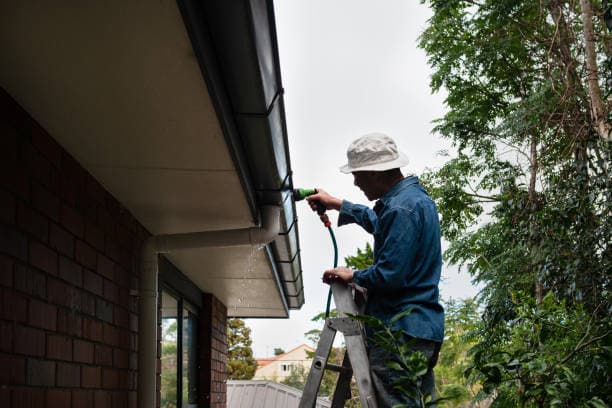
How To Clean Gutters Safely is a practical question for Southwest Florida homeowners because roof drainage affects siding, landscaping, foundations, soffits, and the areas people walk around the home. The safest answer starts with the condition of the roofline, the height of the home, current weather, and whether the person doing the work has the right access equipment. A task that looks simple from the ground can become risky when wet surfaces, uneven soil, overhead power lines, or hidden damage are involved.
This guide explains how to think through how to clean gutters safely, what warning signs deserve attention, and when professional help is the better choice. It is general homeowner guidance rather than a substitute for an on-site inspection. Every roof, gutter system, and drainage layout is different, so the correct approach should match the actual property.
Homeowners should begin by observing the system from the ground during dry weather and, when it is safe, during normal rainfall. Look for overflow, sagging sections, loose fasteners, staining, separated joints, water collecting near the foundation, and downspouts that discharge too close to the home. These clues help separate routine maintenance from a repair or replacement problem.
What homeowners should evaluate first
Start with a ground-level inspection
A ground-level inspection can answer many questions without placing anyone on a ladder. Walk around the home and look along the gutter line for sections that appear lower than the rest. Check for plants growing from the gutter, visible piles of leaves, dark streaks below seams, and water marks on fascia or soffit. Also inspect each downspout connection and confirm that extensions point water away from walkways and the foundation.
Binoculars or a phone camera with zoom can help inspect the roof edge from a safe location. Never stand in a road, climb onto an unstable object, or lean over a pool cage to get a better view. If the roof edge cannot be seen safely, note the symptoms and ask a professional to inspect it.
Match the response to the condition
The same symptom can have more than one cause. Overflow may come from debris, an undersized gutter, poor pitch, a blocked downspout, or a roof valley that sends concentrated water into one short section. A loose gutter may need new fasteners, but damaged fascia behind it may also need repair. Water near the home may be caused by a missing extension even when the gutter itself is clear.
| What you notice | Possible explanation | Sensible next step |
|---|---|---|
| Water spilling over one short area | Local blockage, roof valley flow, or poor pitch | Inspect the outlet and gutter alignment |
| Overflow along most of the roofline | Heavy debris, limited capacity, or widespread pitch problems | Arrange a full system assessment |
| Sagging or pulling away from fascia | Loose hangers, excess weight, or damaged wood | Avoid loading the gutter and request repair |
| Downspout drains beside the home | Missing or poorly directed extension | Redirect discharge to an appropriate area |
| Stains below a seam or end cap | Failed sealant, movement, or corrosion | Have the joint cleaned and repaired |
This comparison is useful because it keeps the response focused on the cause instead of the most visible symptom.
Consider weather and property access
Florida heat, sudden storms, wet soil, and slick roof materials can change the risk quickly. Do not begin exterior work when rain, lightning, strong wind, or wet surfaces are present. Keep children and pets away from the work area, and do not place equipment where it can contact service lines, vehicles, doors, or unstable landscaping.
Homes with two stories, steep rooflines, pool cages, limited side-yard access, or overhead utilities deserve extra caution. These conditions often make professional equipment and a second trained worker worthwhile. The goal is not simply to complete the task. The goal is to address the drainage problem without creating an injury or damaging the roof, gutter, or home.
A practical plan for the gutter system
Decide whether maintenance or repair is needed
When the gutter is structurally secure and the concern is light debris, maintenance may be enough. If the gutter is bent, separated, leaking, or pulling from the fascia, cleaning alone will not solve the problem. Likewise, a downspout that repeatedly clogs may need its outlet, elbows, underground connection, or capacity reviewed.
Document what you see before work begins. Photos of overflow locations, stains, and low spots can help a contractor understand the pattern, especially if the problem only appears during heavy rain. Note whether water comes over the front edge, runs behind the gutter, or backs up near a downspout. Those details can shorten diagnosis time.
For local help, the North Port gutters team can inspect the system and explain whether cleaning, repair, guards, or replacement is appropriate. Homeowners can also review this related gutter maintenance guidance before deciding on the next step.
Use a safety-first approach
If a homeowner chooses to perform any ground-accessible maintenance, eye protection, gloves, closed-toe footwear, and a clear work area are basic precautions. Tools should be used only as their manufacturer directs. Avoid forcing hoses, rods, or attachments into an unknown obstruction because disconnected elbows and damaged underground drains can make the problem worse.
Ladder work deserves a higher level of planning. The ladder must be rated for the combined weight of the user and tools, placed on firm level ground, and positioned away from doors and electrical hazards. Someone should remain nearby. Reaching sideways, stepping onto a roof, or resting weight on the gutter can cause a fall or damage the system. When stable access is not possible, stop and call a professional.
Check drainage after the work
Finishing the visible task is not the final check. Water still needs a clear path through the gutter, outlet, downspout, and discharge area. A controlled low-flow test can reveal leaking seams or slow drainage, but it should not be used when a serious blockage, damaged gutter, or unsafe access condition is present.
After the next normal rainfall, inspect from the ground again. Confirm that the gutter is not overflowing, water is not running behind it, and downspouts are discharging away from the building. If the same symptom returns, the cause may involve pitch, capacity, roof design, or hidden damage rather than routine debris.
Build a repeatable maintenance schedule
The best timing depends on nearby trees, roof type, storm exposure, and whether guards are installed. A home surrounded by pines or broadleaf trees may need more frequent checks than an open property. Inspections are especially useful before the rainy season and after major wind events.
A simple record of inspection dates, cleaning, repairs, and recurring problem areas makes future decisions easier. It also helps identify a section that repeatedly overflows or loosens. Repeated problems usually deserve diagnosis instead of another temporary cleanup.
Seasonal planning also reduces rushed decisions. Before the summer rain pattern becomes established, check that downspout extensions are connected, discharge areas are open, and visible gutter sections remain securely attached. After strong wind, look from the ground for shifted sections, storm debris, or water marks that were not present before. If a contractor performs maintenance or repair, ask what caused the problem, which areas should be watched, and when another inspection makes sense. Clear notes and photos give the homeowner a useful baseline for the next storm season. They also make it easier to explain a recurring concern without relying on memory. A planned inspection during safe, dry conditions is usually more productive than reacting while water is actively overflowing or while the ground is saturated.
Frequently Asked Questions
Can every gutter issue be handled as a do-it-yourself project?
No. Ground-level observations and simple discharge corrections may be manageable, but elevated work, damaged fascia, loose gutters, electrical hazards, steep roofs, and difficult access are reasons to use a professional. Safety and proper diagnosis matter more than completing the task without help.
How can I tell whether a downspout is blocked?
Common signs include overflow near the outlet, little or no discharge during rain, water leaking at an elbow, or debris packed into the top opening. A blockage may be inside the downspout or in a connected underground drain, so forcing it without knowing the layout can cause separation or damage.
Will cleaning fix a gutter that keeps overflowing?
Cleaning helps when debris is the cause. It will not correct an undersized system, poor pitch, a concentrated roof valley, loose hangers, or an inadequate outlet. If a clean gutter still overflows, the system should be evaluated during or immediately after rainfall.
When should a gutter contractor inspect the home?
Request an inspection when gutters sag, pull away, leak behind the system, overflow repeatedly, or send water toward the foundation. Professional help is also appropriate whenever the roofline or access conditions make inspection unsafe. A clear assessment can distinguish maintenance from repair and prevent repeated temporary fixes.
Need Help With Your Gutters?
No Leak Gutters handles all gutter installation, repair, and maintenance across Sarasota & Charlotte Counties. Get a free estimate today.
Related Gutter Services
Learn more about the services mentioned in this article.