
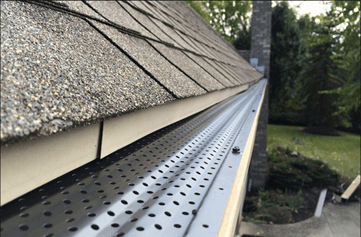
What Is the Best Type of Gutter Guard? The short answer is that the best gutter guard is the one that matches your roof, your debris load, and how much maintenance you are realistically willing to do. For many Southwest Florida homes, that usually means a high-quality, low-maintenance guard that is Florida-product-approved, compatible with the existing gutter system, and installed the way the manufacturer intended.
That answer matters because there is no single guard that is best for every home. A property surrounded by pine trees has different needs than a home under mature oaks. A steep roof sheds water differently than a low-slope roof. A house that gets frequent storm debris needs a different level of protection than one that mainly deals with seasonal leaf drop. The best choice is the one that keeps gutters clearer without creating new problems at the roof edge.
How to Choose the Right Gutter Guard for a Florida Home
Start with the debris you actually get
The first step is identifying what falls into your gutters most often.- Large leaves and broad tree debris: A solid-cover or micro-mesh style often performs better than a basic screen.
- Pine needles: A finer micro-mesh design is usually more effective than perforated or coarse screen products.
- Seed pods and small grit: Smaller openings generally help keep this material out better than wide openings.
- Storm debris: The guard should shed debris cleanly and not become a trap during heavy wind-driven weather.
Match the guard to the roof and gutter system
A gutter guard should work with the home you already have, not fight against it. Roof pitch affects how quickly water and debris move. Fascia condition affects how securely a guard can be fastened. Gutter size affects how much water the system can carry during heavy rain.If the gutter is undersized, damaged, or already pulling away from the fascia, a guard will not fix those problems. In that case, repair should come before any add-on product. The most effective guard is one that fits the system cleanly and does not create overflow issues at the edge.
Think about maintenance honestly
No gutter guard is truly maintenance-free. Even the best system still benefits from periodic inspection, especially in Florida where storms can drop leaves, palm fronds, twigs, and roof grit into the system. Homeowners who do not want to climb ladders regularly may prefer a design that reduces cleanouts as much as possible, but the system still needs occasional attention.If you know you will not maintain it at all, choose a guard that is simple, sturdy, and less likely to trap debris on top. If you are comfortable with occasional cleaning, a finer guard may give better performance overall.
Why Florida approval matters
In Florida, product approval is not a minor detail. A gutter guard should be approved where required, documented properly, and installed within its approved limitations. That matters in a hurricane-prone state because fasteners, materials, and attachment methods need to hold up under real conditions.A guard that looks good in a brochure but is not approved or not installed correctly can create more risk than benefit. That is especially true if the product relies on weak attachment points or untested add-on hardware. For Florida homes, approval and proper installation are part of the best choice, not separate from it.
Quick comparison of common gutter guard types
| Gutter guard type | Best for | Strengths | Limitations |
|---|---|---|---|
| Basic screen | Low debris areas or temporary use | Easy to understand, usually lower cost | Lets in finer debris, may clog faster |
| Perforated cover | Mixed debris and moderate maintenance goals | Better than basic screening, simple design | Can still allow pine needles and small seed pods through |
| Micro-mesh | Homes with leaves, pine needles, and small debris | Strong filtration, good at keeping small material out | Higher cost, must be installed well and maintained occasionally |
| Solid-cover style | Homes with heavy leaf fall and strong water shedding needs | Can move debris off the edge effectively | Quality varies, may still need cleaning and careful fitting |
What usually makes one option better than another
For a Southwest Florida homeowner, the best type is often the one that balances four factors:1. Keeps out the debris you actually have. 2. Handles heavy rain without causing overflow. 3. Fits securely and is approved for use in Florida when applicable. 4. Reduces maintenance without pretending to eliminate it.
If you want more context on why gutter protection matters in our climate, see the practical overview in gutter guard benefits in Florida.
When a premium guard is worth it
A higher-quality guard is usually worth considering if:- Trees are close to the roofline.
- Pine needles, seed pods, or small debris are common.
- You have had repeated clogs or overflow.
- You want to reduce ladder work.
- The home has a gutter system that is in good condition and can support a proper installation.
What can go wrong with the wrong guard
A poor choice can create new problems:- Water can overshoot the gutter during heavy rain.
- Debris can accumulate on top and become harder to remove.
- Fasteners can loosen if the product was not installed properly.
- The guard can interfere with roof edge drainage.
- The homeowner may assume the system never needs attention, which can lead to hidden buildup.
What Performs Best in Southwest Florida Conditions
The local climate changes the decision
Southwest Florida brings a mix of challenges that are hard on gutter systems. Frequent rain, strong sun, tropical storms, windblown debris, and seasonal tree drop all affect performance. A gutter guard that works fine in a dry climate may not be the right choice here.For this region, the strongest practical recommendation is usually a durable, low-maintenance guard that keeps out small debris and does not depend on flimsy fastening. Homes with heavier leaf or pine debris often benefit from micro-mesh. Homes with larger debris may do well with a well-designed solid-cover style or a quality mesh system, depending on the roof and gutter layout.
The guard must not create a hazard
Because Florida is hurricane-prone, a gutter guard should not become a wind hazard, loosen easily, or rely on untested attachment methods. The goal is protection, not a product that adds failure points during bad weather.That means the safest choice is one that is:
- Approved where required
- Installed according to the manufacturer instructions
- Compatible with the existing roof edge and gutter size
- Able to handle local rainfall and storm debris
- Easy enough to inspect and maintain when needed
A simple homeowner decision process
Use this quick process to narrow the options:1. Look at the trees around your house. 2. Identify whether the debris is mostly leaves, needles, seed pods, or storm litter. 3. Check whether the gutters are in good condition. 4. Decide how much maintenance you will realistically do. 5. Choose the best approved product that fits your roof and gutter system.
That process is more useful than choosing a guard based only on price or appearance.
Best overall answer for most homeowners
For many Southwest Florida homes, the best type of gutter guard is a high-quality micro-mesh or other approved low-maintenance system that is properly installed and matched to the home’s debris pattern. That said, if your roof mostly sheds larger material and you want a simpler setup, a well-made solid-cover option may be a better fit. The right answer is the one that balances debris control, water flow, approval, and upkeep.If you are planning a gutter upgrade and want a system that is coordinated with the rest of the home, a local homeowner can start by thinking about how the gutters perform today and whether the issue is clogging, overflow, or damage. A good guard helps with clogging, but it is not a substitute for repairing the gutter system itself.
Frequently Asked Questions
What type of gutter guard is best for pine needles? Micro-mesh is usually the better choice for pine needles because the openings are small enough to block finer debris. A coarse screen or wide-perforation product often lets too much through.
Are gutter guards worth it in Florida? They can be worth it when they are chosen for the right debris type and installed correctly. In Florida, they are most useful when the goal is to reduce clogs from leaves, needles, seed pods, and storm debris while still allowing water to move through the system.
Do gutter guards mean I will never clean my gutters again? No. Even good gutter guards still need inspection and occasional debris removal. Florida weather can leave material on top of the guard or around downspouts, especially after storms.
Should I choose the cheapest gutter guard available? Usually not. The lowest-cost option may save money upfront but can clog faster, fit poorly, or wear out sooner. It is better to choose the best approved option for your home’s debris and roof conditions.
Can any gutter guard be used on any house? No. The guard needs to match the gutter size, roof edge, fascia condition, and local performance needs. In Florida, approval and correct installation matter too, so compatibility should be checked before any product is installed.
For homeowners in north port gutters, the best result usually comes from selecting a guard based on the actual debris around the home, then confirming it is approved and properly installed. That approach is more reliable than chasing a one-size-fits-all product, because gutters, roofs, and maintenance habits vary from house to house.
For matching local service options, see north port gutters.
Need Help With Your Gutters?
No Leak Gutters handles all gutter installation, repair, and maintenance across Sarasota & Charlotte Counties. Get a free estimate today.
Related Gutter Services
Learn more about the services mentioned in this article.